
Introduction
Tempered glass is a safety‑engineered glass and it produced by heating annealed glass to the tempering range and then rapidly cooling it (quenching) to induce surface compression and internal tension. Because of this heat treatment, tempered glass offers significantly higher mechanical strength, predictable fragmentation behavior and improved thermal shock resistance compared with annealed glass. This guide covers production steps, typical specifications, standards to request, buyer acceptance checks, maintenance and heat‑soak testing recommendations.
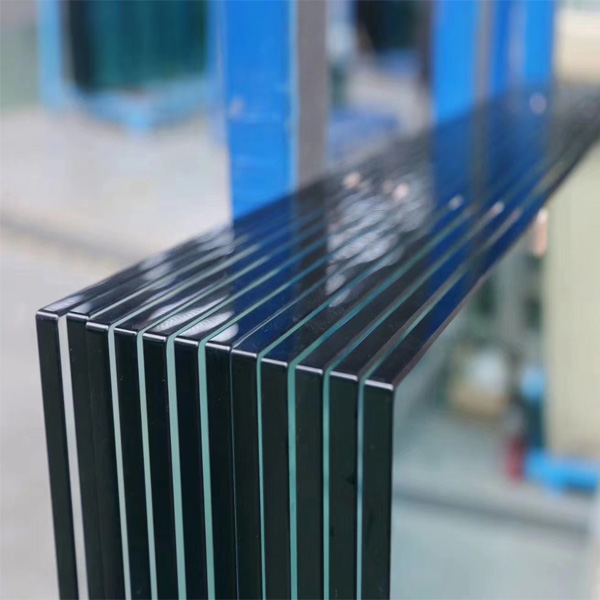
What is tempered glass?
Tempered (toughened) glass is float glass that has undergone thermal treatment to generate a compressive stress layer on the surfaces with a corresponding tensile core. This stress profile increases strength and causes the pane, when it breaks, to crumble into small, relatively blunt fragments rather than sharp shards.
Key benefits
• Higher mechanical strength: tempered glass typically delivers about 3–5× higher practical impact resistance compared to annealed glass of the same thickness.
• Safer fragmentation: broken tempered panes form small, less dangerous fragments.
• Improved thermal performance: greater resistance to thermal shock (larger ΔT tolerated versus annealed).
• Speed & cost considerations: for many applications tempered glass is a cost‑effective safety option vs. laminated alternatives (choose by functional need).
Typical applications
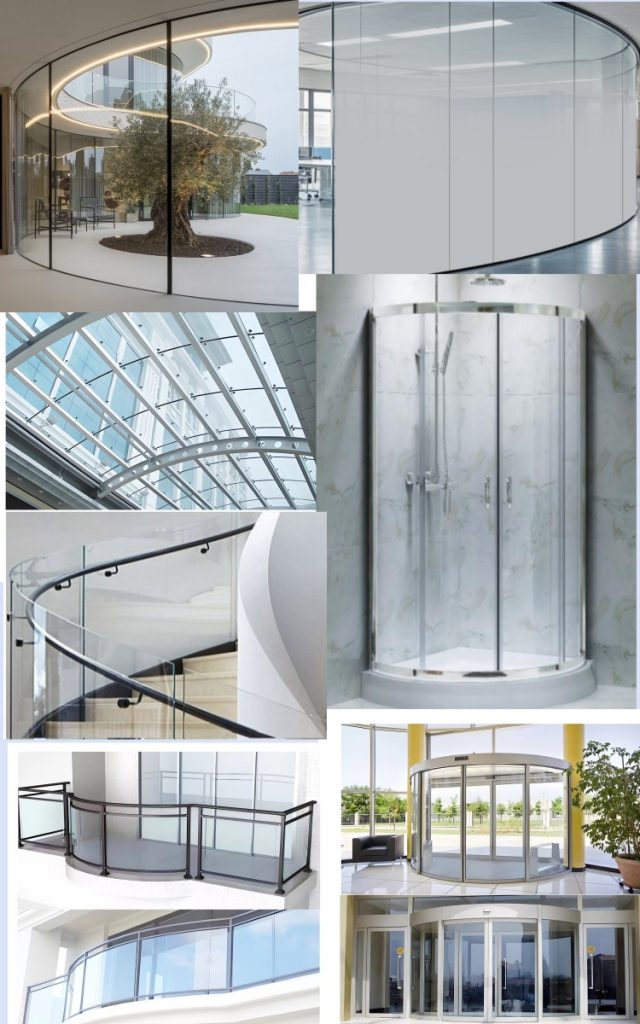
Doors and storefronts, shower enclosures, balustrades and stair guards, interior partitions, furniture tops, curtain walls and other locations where strength or controlled break behavior is required.
Production process — step‑by‑step (technical)
1.  Incoming inspection: verify thickness, flatness, and screen for visible inclusions, scratches or edge damage.
2.  Cutting & pre‑tempering processing: cut to final dimensions; all drilling, notches, holes and edgework must be completed before tempering.
3.  Edge polishing & chamfering: remove micro‑chipping and stress concentrators.
4.  Cleaning: ultrasonic or chemical cleaning for oil/dust removal — critical for uniform heating.
5.  Heating / soak: glass is heated in a tempering furnace to the target tempering range (typical ~620–680°C) to equalize temperature across the pane.
6.  Quench (rapid cooling): high‑pressure air jets rapidly cool the surfaces, locking compressive stresses on the surface and tensile stresses in the core.
7.  Final inspection & testing: visual inspection, fragmentation sampling, and optional residual surface stress measurement.
8.  Optional — Heat‑Soak Testing (HST): batch oven process to accelerate failures caused by NiS inclusions; recommended for large/critical panes (EN 14179).
9.  Packaging & labeling: crate/A‑frame packaging with protective corners; include batch/tempering certificates.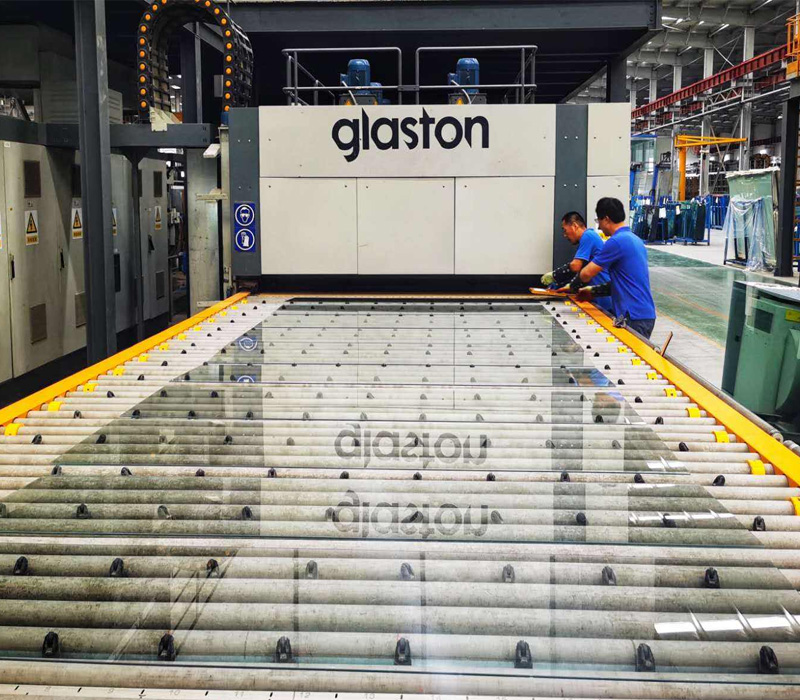
Standards & certifications to request
•   EN 12150 — thermally toughened soda‑lime silicate safety glass (Europe).
•   ASTM C1048 — standard for heat‑treated flat glass (United States).
•   EN 14179‑1 — Heat‑Soak Test specification.
Always request test reports, tempering batch numbers and traceable documentation for project record keeping.
Common thicknesses & sizes
Common thicknesses include 3, 4, 5, 6, 8, 10, 12, 15 mm; maximum producible sizes depend on a supplier’s tempering line capacity — confirm per supplier.
Buyer / site acceptance checklist
•   Confirm all mechanical processing (holes/notches/edgework) was completed prior to tempering.
•   Request tempering batch numbers and production photos.
•   Ask for Heat‑Soak Test (HST) certificate for high‑risk or large‑area glazing.
•   Inspect edge finish, flatness and dimensional tolerances on delivery.
•   Confirm compatibility of any coatings or low‑E layers with tempering.
Maintenance & replacement
Clean with neutral cleaners and soft microfiber cloths. Avoid metal scrapers and abrasive pads. Replace any cracked or chipped tempered pane—do not attempt local repairs.
Frequently Asked Questions (short)
A: No. toughened glass cannot be machined after tempering; any mechanical processing must be completed before tempering.
A: Typical tempering furnace soak temperatures are about 620–680°C, depending on furnace calibration and glass type.
A: Ask for compliance/test reports to EN 12150, ASTM C1048 and, where applicable, EN 14179 (Heat‑Soak) and any project‑specific certificates.
A: Toughened glass is typically about 4× (four times) stronger in impact resistance than the same thickness of annealed glass
A: They serve different safety functions. toughened glass resists impact and fragments into small pieces; laminated glass retains fragments and maintains a barrier after breakage. Choose by application and local codes.
A: Require HST for large panes, overhead glazing, façades or any installation where breakage could cause serious impact.