
Modern bathrooms demand materials that are safe, durable, and design-forward. At the center of that balance is shower enclosure glass. This guide covers glass types, safety standards, recommended thickness, hardware compatibility, installation best practices, maintenance, and specs so architects, contractors, and homeowners can specify with confidence.
What Is Shower Enclosure Glass?
Shower enclosure glass is safety glazing engineered for wet, high-use spaces. It’s processed (tempered or laminated), sized, and edge-finished to integrate with U-channels, hinges, clamps, and seals, delivering a rigid, water-tight, and elegant envelope around the shower area.
Why Choose High-Quality Shower Enclosure Glass?
• Safety First: Toughened and laminated glass reduces the risk of injury.
• Durability: Resistant to impact, moisture, and temperature fluctuations.
• Design Appeal: Frameless, frosted, and patterned options elevate bathroom interiors.
• Low Maintenance: Coated glass reduces water stains and limescale buildup.
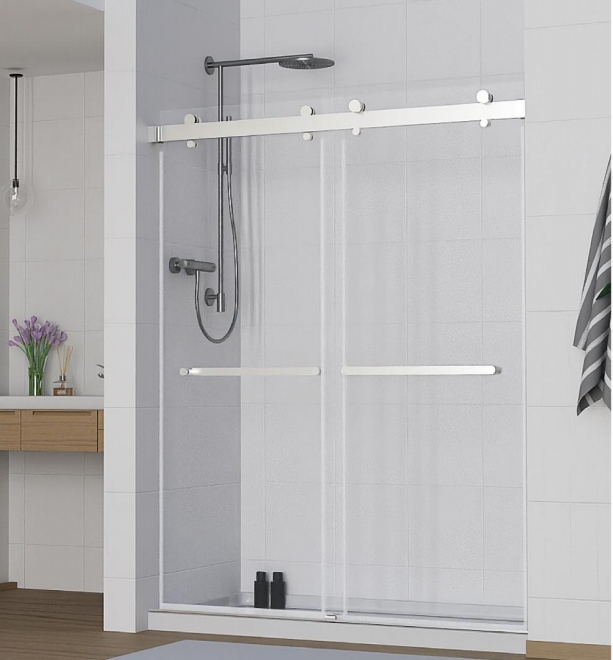
Main Types of Shower Enclosure Glass
1.Tempered (Toughened) Glass — The Workhorse
•   4–5 times stronger than regular glass.
•   Breaks into small blunt fragments to minimize injury risk.
• Ideal for framed, semi-frameless, and frameless systems.2.Laminated Glass — Safety + Acoustic Comfort
• Two (or more) plies bonded with a PVB/EVA interlayer.
• Glass stays attached to the interlayer if broken (enhanced safety).
• Adds sound damping and UV reduction; useful for premium or privacy-focused bathrooms.
3.Frosted / Etched / Satin Glass — Built-In Privacy
•	Diffuses light while obscuring silhouettes.
•	Finishes: acid-etched, sandblasted, ceramic-frit, or satin PVB (laminated).
Low-Iron (Ultra-Clear) Glass — True Color Rendering
• Reduced green tint for crystal-clear edges; popular in luxury projects.
Tinted or Patterned Glass — Design Statement
•   Customizable with textures, colors, or digital printing.
•   Ideal for bespoke bathroom projects.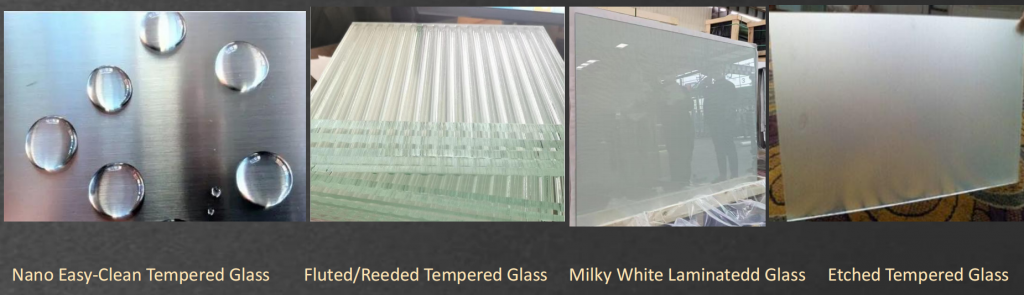
Recommended Thickness of Shower Enclosure Glass
•   6 mm – Suitable for framed shower doors.
•   8 mm – Standard for semi-frameless enclosures.
•   10–12 mm – Best for frameless luxury designs.
Global Safety Standards
Quality shower enclosure glass must comply with international certifications:
• EN 12150 (Europe) – Safety standard for tempered glass.
• ANSI Z97.1 (USA) – Safety glazing materials in buildings.
• AS/NZS 2208 (Australia/New Zealand) – Toughened safety glass compliance.
• CCC Certification (China) – Mandatory national safety standard.

For laminated options, specify interlayer type & thickness; for printed/fritted glass, confirm edge cover and tempering/heat-soak where required.Hardware & Detailing That Matter
•   Edges: Flat-polished with safe arrises; no chips or shells in hinge zones.
•   Cut-outs & Holes: CNC-processed before tempering/laminating; follow hardware maker’s templates.
•   Supports: Rated U-channels, clamps, and hinges (wall, glass-to-glass, pivot).
•   Seals & Gaskets: Clear polycarbonate or silicone sweeps, door strikes, and drip rails.
•   Movement Joints: Allow for building movement; avoid glass-to-tile hard contact.
•   Slope & Drainage: Thresholds and curbs should slope inward (≈2%) to minimize leaks.
Surface Treatments & Options
•   Hydrophobic / Easy-Clean Nano Coatings: Reduce limescale and soap scum, lower maintenance.
•   Anti-Fingerprint (AF) Finishes: Useful on satin/etched surfaces.
•   Ceramic Frit or Screen Printing: Bands for privacy or branding; must be heat-treated.
•   Switchable (Smart) Privacy Glass: Premium upgrade (confirm IP rating and power isolation in wet zones).
Installation Best Practices
1. Survey precisely (plumb, level, squareness, curb slope).
2. Confirm wall backing for hinge and clamp loads.
3. Dry-fit hardware; verify door clearances and sweep.
4. Use non-staining, neutral-cure silicone; avoid contact between glass and masonry.
5. Shim & pack evenly; never wedge glass to force alignment.
6. Final safety check: handle with PPE; caution occupants about first 24 hours while sealants cure.
Care & Maintenance
•	Squeegee after use; wipe with microfiber.
•	Use pH-neutral cleaners; avoid abrasives and harsh acids/alkalis.
•	Reapply easy-clean coatings per manufacturer guidance.
•	Inspect seals, sweeps, and hinges annually; replace worn parts promptly.
Buyer’s Mini-Checklist
•   ✅ Correct type & thickness for the enclosure style
•   ✅ Standards compliance for your market
•   ✅ Edge quality and accurate hardware cut-outs
•   ✅ Rated hinges/clamps/U-channels for panel size and weight
•   ✅ Coatings (easy-clean/AF) and required privacy level
•   ✅ Professional installation and documented warranty
Example Technical Limits (Guidance Only)
•   Typical door width: 600–900 mm (24–36”) depending on thickness & hinge rating
•   Max fixed panel width (frameless): often 1000–1200 mm (40–48”) for 10–12 mm with proper bracing
•   Standard heights: 1900–2200 mm (75–86”) common; taller needs upgraded hardware
Always verify panel size limits with your hardware supplier’s load charts.
Design Trends with Shower Enclosure Glass
•   Frameless Enclosures: Minimalist luxury look.
•   Sliding Glass Doors: Perfect for compact bathrooms.
•   Frosted Privacy Panels: Ideal for shared living spaces.
•   Curved Glass Designs: High-end architectural appeal.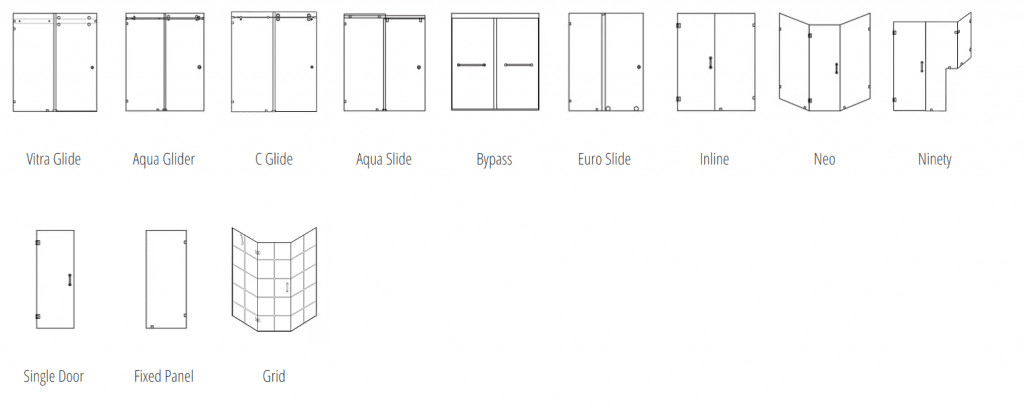
Conclusion
Investing in premium shower enclosure glass enhances both the safety and aesthetics of modern bathrooms. With multiple options—tempered, laminated, frosted, and decorative—you can customize enclosures to fit different design needs while ensuring compliance with global safety standards.
For contractors, designers, and homeowners, the right glass transforms bathrooms into safe, easy-to-maintain, and visually stunning spaces.
FAQ — Shower Enclosure Glass
Tempered is the industry standard for most doors and panels due to strength and safe breakage. Laminated adds an interlayer that holds fragments in place—great for extra safety or privacy laminates.
6 mm for framed, 8 mm for semi-frameless, and 10–12 mm for frameless premium designs. Confirm with hardware load charts and local code.
Not required, but low-iron removes the green edge tint and keeps whites true—ideal for bright, minimal bathrooms.
Ensure curb slope, use continuous U-channels or rated clamps, add sweeps/strikes, and maintain even gaps sealed with neutral-cure silicone.
Specify compliance with EN 12150/12600/14428, ANSI Z97.1 / CPSC 16 CFR 1201, AS/NZS 2208, and CCC (where applicable). Ask suppliers for test reports.
They create a hydrophobic surface that repels water and reduces mineral buildup. They don’t eliminate cleaning, but they cut maintenance time significantly.
Yes—if the substrate is plumb, true, and properly blocked. Your installer will verify wall anchorage and door swing clearances.
Depends on glass processing, cut-outs, coatings, and hardware availability. Complex laminated or printed panels take longer than standard tempered panels.
• Get a quick quote with drawings or site sizes.
• Request samples (clear, low-iron, frosted, laminated).
• Ask for a compliance pack (test reports & certificates).
Contact our technical team today to optimize your design, budget, and lead time.